
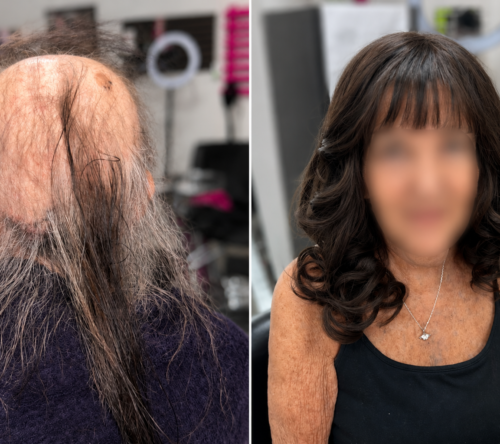
Hair thinning can develop gradually or appear all at once. A wider part, visible crown, fragile edges, patchy loss, or reduced density can make familiar styles feel less comfortable and harder to manage.
Because every pattern is different, one coverage system will not serve every woman. Your thinning pattern, scalp condition, amount of healthy hair, texture, lifestyle, and coverage goals determine which option can create a safe, natural-looking result.
We offer non-surgical coverage options for women experiencing thinning hair and hair loss. Mesh Integration can support more extensive coverage, while Meshless Integration, toppers, and lace closures can address targeted areas. During a private consultation, we assess your hair and explain when a dermatologist should be part of your next step.
Mesh Integration
Broader thinning often needs more coverage than a topper or lace closure can provide on its own. Mesh Integration creates a custom, breathable foundation across the areas that need support, including the crown, top, sides, or hairline.
Your stylist plans the foundation, selected hair, anchor points, and placement around your remaining density and preferred style. As a result, this option can create a fuller, more secure look for women with diffuse thinning, scarring, or more advanced hair loss.
Meshless Integration
For women who notice thinning in a specific area, Meshless Integration offers a lighter coverage option. Small nano beads or micro-rings anchor a custom human-hair topper or lace closure without placing a full mesh foundation across the scalp.
Because it works with healthy hair in the anchor areas, it can bring targeted coverage to a widening part, crown, temples, sides, edges, or hairline. It also keeps more of your natural hair visible in the finished style.
When Your Hair Begins to Change
A widening part, visible crown, thinning edges, patchy loss, or increased shedding can affect much more than a hairstyle. For many women, those changes also make everyday styling feel unfamiliar and frustrating.
LTBHair provides Phoenix women with non-surgical hair-loss coverage options designed around their remaining hair, texture, lifestyle, and the areas they want to address. A private consultation focuses on your coverage goals and whether your hair can safely support a Mesh, Meshless, topper, closure, or another appropriate option.
Hair loss can have many causes, and similar changes may require very different next steps. Common contributors can include:
- Genetics and female pattern hair loss
- Hormonal shifts, including menopause and postpartum changes
- Stress, illness, surgery, or major life changes
- Medications, rapid weight loss, or nutritional changes
- Repeated tension from tight hairstyles
- Autoimmune conditions, inflammation, or other medical concerns
When loss is sudden, severe, painful, inflamed, patchy, or unexplained, a dermatologist should diagnose the cause before a coverage service is considered.
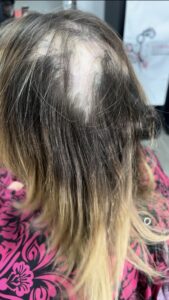
Before photo showing a client with visible scalp scarring and hair loss prior to a customized hair replacement or extension solution at LTBHair in Phoenix, Arizona.
Patterns That Deserve a Closer Look
The information below offers general education rather than a diagnosis. A dermatologist or healthcare provider can identify the medical cause of hair loss and discuss treatment when needed.
Gradual Thinning Through the Crown
Female pattern hair loss often appears as a slow reduction in density through the crown and part. Many women notice less fullness over time rather than one sudden bald area.
Sudden, Patchy Hair Loss
Alopecia areata can create sudden round or patchy areas of hair loss. Because it is an autoimmune condition, a dermatologist should evaluate new or unexplained patches.
Hairline and Temple Tension
Traction alopecia can develop after repeated pulling from tight styles. Reducing tension early and choosing an appropriate style can help protect the hair that remains.
Increased Shedding After a Change
Telogen effluvium describes increased shedding that can follow illness, surgery, childbirth, emotional stress, medications, or significant changes in the body. A healthcare provider can help identify the possible trigger.
When Inflammation or Scarring Is Present
Scarring forms of hair loss, including central centrifugal cicatricial alopecia, also called CCCA, can permanently affect hair follicles. Early medical evaluation is especially important when you notice scalp pain, burning, itching, inflammation, or progressive loss.
Coverage Options Based on Your Hair
Once we understand your concerns, the next step becomes clearer. Some women need broader coverage through the crown and top, while others want support around a part, temple, hairline, or one thinning area.
Options may include Mesh Integration, Meshless Integration, custom human-hair toppers, lace closures, lightweight extensions for appropriate candidates, or protective styling. Each recommendation begins with a consultation because no method should be selected without first seeing the hair in person.
Hair Loss Questions, Answered
These are some of the questions women ask when they first notice a change in density, shedding, or scalp coverage. Every situation is different, so a private consultation helps determine which non-surgical option may be appropriate for your hair.
-
Why am I suddenly losing so much hair?
A sudden increase in shedding can follow stress, illness, hormonal changes, medications, nutritional changes, rapid weight loss, or another medical concern. When the change feels severe, unexplained, or continues, speak with a healthcare provider or dermatologist before choosing a coverage option.
-
Can menopause cause hair loss?
Hormonal shifts during perimenopause and menopause can contribute to thinning, increased shedding, dryness, and changes in texture. A widening part or reduced fullness through the crown may become more noticeable during this stage of life.
-
Can weight-loss medications cause hair shedding?
Some clients notice increased shedding while using GLP-1 medications or after significant weight loss. In many cases, the change may relate to rapid weight loss, nutritional intake, or physical stress on the body rather than the medication alone. Your prescribing provider can help you understand what may be contributing.
-
Can rapid weight loss cause thinning hair?
Fast weight loss, very low-calorie diets, and nutritional deficiencies can interrupt the normal hair-growth cycle and lead to more shedding. Supporting your overall health matters, while a temporary coverage option can help you feel more like yourself during that transition.
-
Can I wear hair extensions if my hair is thinning?
The safest answer depends on the location of the thinning, the strength of the remaining hair, and what your scalp can comfortably support. Some clients may be suited for lightweight extensions, while others may need Mesh Integration, Meshless Integration, a topper, or a lace closure instead.
-
What is Mesh Integration?
A customized mesh foundation can provide broader coverage for women with more extensive thinning through the crown, top, sides, or hairline. Selected human hair is integrated into the foundation to create fuller coverage while protecting the remaining natural hair underneath.
-
What is the difference between Mesh and Meshless Integration?
Mesh Integration uses a custom mesh foundation when a larger area needs support. Meshless Integration does not use a full mesh base; instead, small nano beads or micro-rings support a human-hair topper or lace closure in more targeted areas where healthy anchor hair is available.
-
Can traction alopecia improve?
Early traction alopecia may improve when repeated pulling and tension are reduced. Long-term tension can permanently damage follicles, which is why thinning around the hairline, temples, or edges deserves attention as soon as you notice it.
-
Do you work with women who have alopecia?
Yes. Non-surgical coverage options can help women with many forms of alopecia feel more comfortable with their appearance. Because alopecia has different causes and patterns, medical diagnosis and treatment should come from a dermatologist, while we focus on appropriate coverage and styling.
-
Will extensions make my hair loss worse?
An installation that is too heavy, too tight, or placed on fragile hair can create additional stress. That is why a method is never chosen by trend alone. Your remaining density, scalp comfort, lifestyle, and coverage needs guide the recommendation.
-
Do I need a consultation before choosing a hair-loss solution?
Yes. The consultation includes a conversation about your hair history, visible areas of concern, texture, lifestyle, desired coverage, and the natural hair available for support. From there, we can explain which non-surgical options fit your needs and which ones do not.
-
When should I see a dermatologist?
Please schedule a medical evaluation for sudden or patchy loss, scalp pain, burning, itching, inflammation, scarring, or an unexplained change. The American Academy of Dermatology also provides helpful information about different types and causes of hair loss.
-
Which hair-loss solution is right for me?
The right option depends on where thinning appears, how much healthy hair remains, your scalp comfort, texture, daily routine, and the amount of coverage you want. Mesh Integration, Meshless Integration, toppers, lace closures, and carefully selected extensions each serve different needs.
-
Can stress cause hair loss?
Physical and emotional stress can affect the hair-growth cycle and trigger increased shedding, sometimes called telogen effluvium. Illness, surgery, major life changes, and emotional stress can all play a role, so it is important to discuss ongoing shedding with your healthcare provider.
-
Can thyroid problems cause hair loss?
Both an underactive and overactive thyroid can contribute to thinning or noticeable shedding. A healthcare provider can order the appropriate testing and determine whether thyroid function may be part of the picture.
-
Can low iron cause hair loss?
Iron deficiency and other nutritional concerns may contribute to increased shedding or slower growth. Only a healthcare provider can determine whether a deficiency is involved through the appropriate testing.
-
How long does it take for hair to grow back after excessive shedding?
Recovery time depends on the cause. Shedding related to stress, illness, childbirth, or nutritional changes may improve over several months once the underlying concern is addressed. Your provider can offer guidance specific to your situation.
-
Are hair toppers better than wigs?
Neither is automatically better; they solve different coverage needs. A topper covers a specific area, such as the crown, part, or top, while allowing surrounding natural hair to remain visible. A wig provides more complete coverage when that is the better fit.
-
How long does Mesh Integration last?
Mesh Integration requires regular maintenance as your natural hair grows. The timing depends on your hair growth, the system design, lifestyle, and home care. Your consultation includes the expected service schedule before you commit to an installation.
-
How often will my hair-loss coverage system need maintenance?
Every system needs professional maintenance to preserve the finished look and protect the natural hair underneath. The method you wear, your growth pattern, scalp needs, and daily routine determine the timing of those visits.
-
Can Black women with textured hair benefit from Mesh Integration?
Yes. Mesh Integration can be customized for textured, coily, curly, wavy, and straight hair when the remaining density and scalp condition are suitable. Texture, curl pattern, preferred styling, and coverage goals all shape the design of the finished system.
-
Can I color my hair if I am experiencing hair loss?
Color may be possible, but the condition of your natural hair and scalp should come first. When hair is fragile or thinning, a gentler approach, a different color plan, or a coverage solution may be the better choice.
-
Is hair loss hereditary?
Genetics can play a role in female pattern hair loss, which often appears as gradual thinning or a widening part. Although a salon cannot diagnose hereditary loss, a dermatologist can evaluate the cause while we help you explore non-surgical coverage options.
-
Can postpartum hair loss be treated?
Many women experience temporary shedding after childbirth because hormone levels change. Hair often begins to recover over time, but a healthcare provider should evaluate shedding that feels severe or continues longer than expected. In the meantime, a lightweight coverage plan may help you feel confident while your hair adjusts.
LTBHair provides non-surgical coverage and styling solutions. A dermatologist or healthcare provider should diagnose and treat the medical cause of hair loss.
Not sure whether Mesh Integration is the best coverage option for you? Explore our hair loss solutions →


