
Can You Wear Hair Extensions With Fine or Thinning Hair?
Hair Extensions for Fine or Thinning Hair
If your hair is fine or thinning, you may have wondered whether hair extensions are even an option for you. The answer depends on your natural hair, its density, where the thinning is occurring, and the type of extension method being considered.
At LTBHair in Phoenix, I work with women with a wide range of hair densities and textures. Rather than choosing an extension method based only on the desired hairstyle, I first consider what the natural hair can safely and comfortably support.
Which Hair Extensions Are Best for Fine Hair?
There isn’t one extension method that’s best for every person with fine hair. K-Tip extensions, I-Tip extensions, braidless wefts and hybrid installations can all be options in the right circumstances.
The amount of hair used, attachment size, weight and placement are just as important as the method itself. A customized installation can also combine methods when one technique isn’t appropriate throughout the entire head.
What If Your Hair Is Thinning at the Crown?
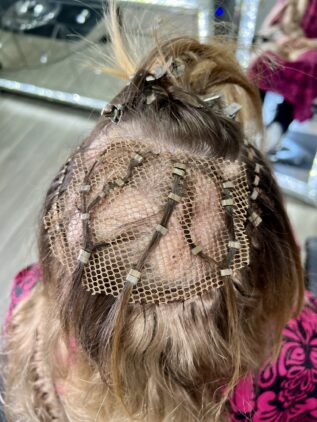
Crown thinning requires a different approach. Traditional extensions add length and density to existing hair, but they cannot always provide coverage where there isn’t enough natural hair to support them safely.
Depending on the location and degree of thinning, a customized hair-loss solution such as mesh integration may be more appropriate. In other cases, extensions can be strategically incorporated to add fullness while working around areas that should not carry additional tension.
Why Extension Weight and Placement Matter
With fine hair, more hair isn’t always better. An extension installation should be designed around the amount of natural hair available to support each attachment. Using attachments that are too heavy or placing extensions in areas that don’t have adequate density can create unnecessary tension on the natural hair.
This is also why two clients asking for the same length or fullness may need completely different installations. One client may be a good candidate for small K-Tip bonds, another may benefit from I-Tips or a lightweight weft, while another may need a combination of methods. The goal is to create fullness and movement without asking the natural hair to support more than it reasonably should.
A Consultation Comes First
Fine or thinning hair does not automatically mean that you cannot wear hair extensions. It does mean that the health, density and condition of your natural hair should determine the installation—not simply the look you want to achieve.
At LTBHair, consultations allow me to examine your natural hair, discuss your concerns and recommend options based on what your hair can realistically support.
If you’ve been told that your hair is too thin for extensions, or you’re unsure which method may work for you, schedule a hair extension consultation at LTBHair in Phoenix to explore your options.